27.11.2026
How to store firewood: 8 practical tips
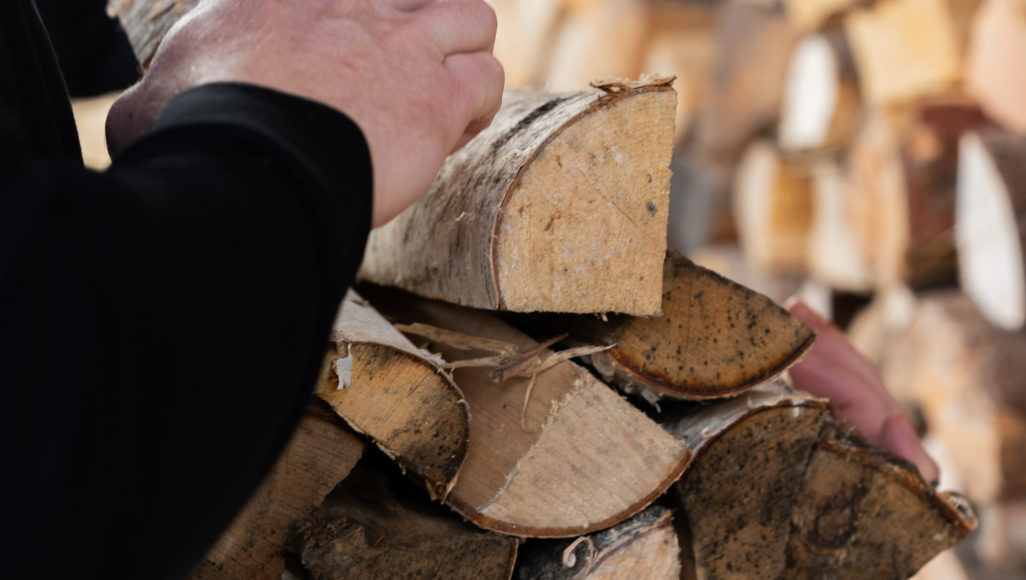
How to store firewood properly is a common question, especially if you want your logs to stay dry and ready to burn. What many people overlook is that protecting logs from rain is only half the job. Firewood also needs airflow, and covering it too tightly can actually slow down the drying process.
Proper firewood storage is especially important for a wood-burning sauna. Wet logs are harder to light, produce less useful heat, and can leave more soot behind. Fortunately, keeping your firewood in good condition doesn’t require an expensive woodshed. A few simple habits can make all the difference.
Firewood storage essentials:
- Keep firewood raised off the ground.
- Protect logs from rain and snow.
- Leave the sides of your woodpile open for airflow.
- Allow freshly cut wood enough time to season before burning.
8 practical tips for firewood storage
These 8 practical tips for firewood storage cover everything from choosing the right location to checking whether your logs are ready to burn.
1. Choose a dry, well-ventilated storage area
Choose a dry, well-ventilated storage area such as a woodshed or covered outdoor space. A roof protects the logs from rain and snow, while good airflow allows moisture to escape from the wood.
If you don’t have a dedicated woodshed, a covered outdoor firewood rack can work just as well. Choose a sunny, breezy location whenever possible, as both sunlight and moving air help firewood dry.
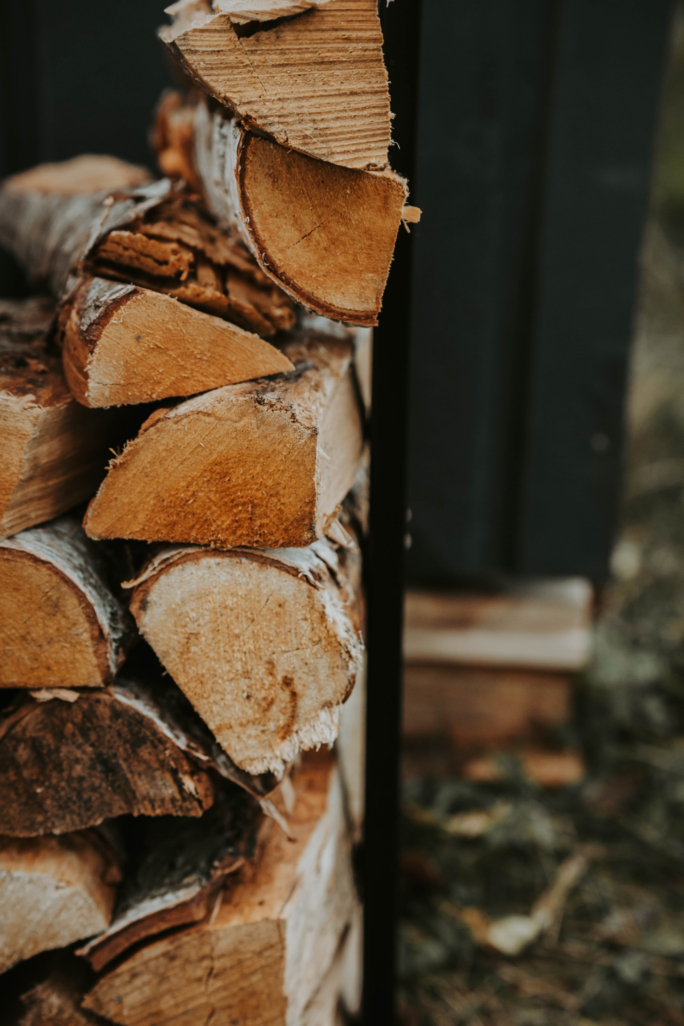
A good storage location should offer protection from the weather without trapping moisture. If your logs are still seasoning, choose a spot where sunlight and moving air can reach the stack throughout the day.
2. Keep firewood off the ground
Keep firewood off the ground to prevent moisture from soaking into the bottom logs. Stacking wood directly on soil or grass can leave it damp and increase the risk of mould and decay.
To prevent this, raise your firewood above ground level. Wooden pallets, timber supports, or a purpose-built firewood rack are all practical options.
Helpful tip: Make sure air can circulate underneath the stack as well as around it. This helps keep the bottom logs dry.
3. Cover the top, but leave the sides open
Cover the top of your firewood stack to protect it from rain and snow, but leave the sides open to allow air to circulate.
Wrapping an entire woodpile tightly in a tarpaulin can trap moisture and slow down the drying process. A roof or shelter that protects the top while leaving the sides open is usually the best solution.
If you’re using a tarpaulin, cover the top of the stack and make sure rainwater can run off easily.
Remember: firewood needs protection from rain, but it also needs fresh air to dry.
4. Stack firewood properly
Stack firewood properly to improve airflow, support even drying, and make your logs easier to access.

Arrange the logs in stable rows, allowing air to circulate between them. Avoid packing freshly split firewood too tightly, as this can slow down the drying process.
If you store logs alongside a building, leave a gap between the stack and the wall. This improves airflow and helps prevent moisture from collecting against the building.
Make sure the stack is stable and cannot collapse, particularly in areas where children or pets may be present.
5. Give freshly cut firewood enough time to season
Give freshly cut firewood enough time to season before using it in your wood-burning sauna stove. Seasoning means allowing the wood to dry naturally until it is suitable for burning.
Freshly felled wood contains a considerable amount of moisture and should not be used immediately.
Drying time depends on the wood species, log size, climate, and storage conditions. It can take many months, and in some conditions a year or longer.
To speed up the process, split larger logs as early as possible and stack them in a sunny, well-ventilated location.
Rather than relying on a fixed drying period, check the wood itself before burning it. Even logs that have been stored for a long time may still contain too much moisture if the drying conditions were poor.
6. Check that your firewood is dry before burning
Check that your firewood is dry before burning it, even if the logs look and feel dry on the outside.
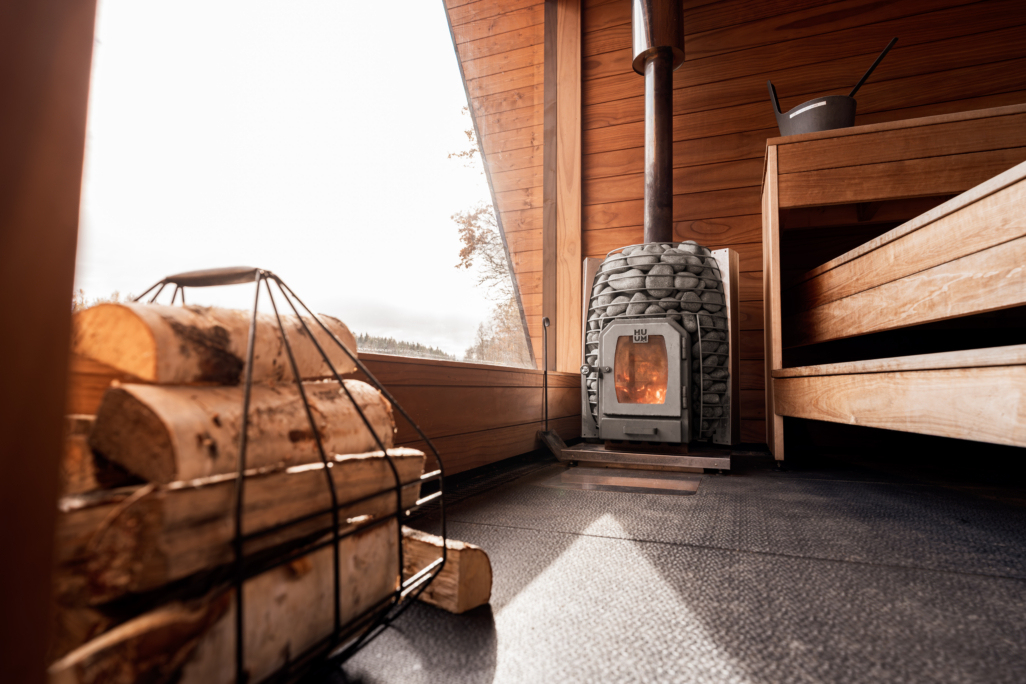
A log can appear perfectly dry while still holding moisture inside. This is why checking the surface alone isn’t always enough.
The easiest way to check is with a wood moisture meter. Split a log and test the freshly exposed inner surface for a more reliable reading.
Wet firewood is harder to ignite, produces less useful heat, and can increase smoke and soot formation. For wood-burning sauna stoves, always follow the manufacturer’s recommendations for suitable firewood.
A quick moisture check can help you avoid problems when heating your sauna.
7. Bring firewood indoors before heating your sauna
Bring firewood indoors before heating your sauna, especially during the colder months.
Cold logs brought into a warm room can develop condensation on their surface. If you place them straight into the firebox, that extra moisture may make lighting the fire more difficult.
The Estonian sauna book Saun. Ajalugu. Kultuur. Tervis. Ehitus (2023) recommends bringing firewood indoors at least a day before heating the sauna in autumn and winter.
You only need enough logs for your next sauna session. Keep them in a dry, well-ventilated space outside the hot sauna room, safely away from the stove and other heat sources.
8. Use older firewood before newer logs
Use older firewood before newer logs, provided it has dried sufficiently and is ready to burn.
When adding fresh firewood to your storage area, keep it separate from seasoned logs. This prevents dry and unseasoned wood from getting mixed together.
If possible, divide your woodshed into two sections: one for ready-to-burn firewood and another for logs that are still drying. This simple system keeps your supply organised and makes sauna preparation easier.
What is the best firewood for a wood-burning sauna stove?
The best firewood for a wood-burning sauna stove is properly seasoned, untreated wood that meets the stove manufacturer’s recommendations.
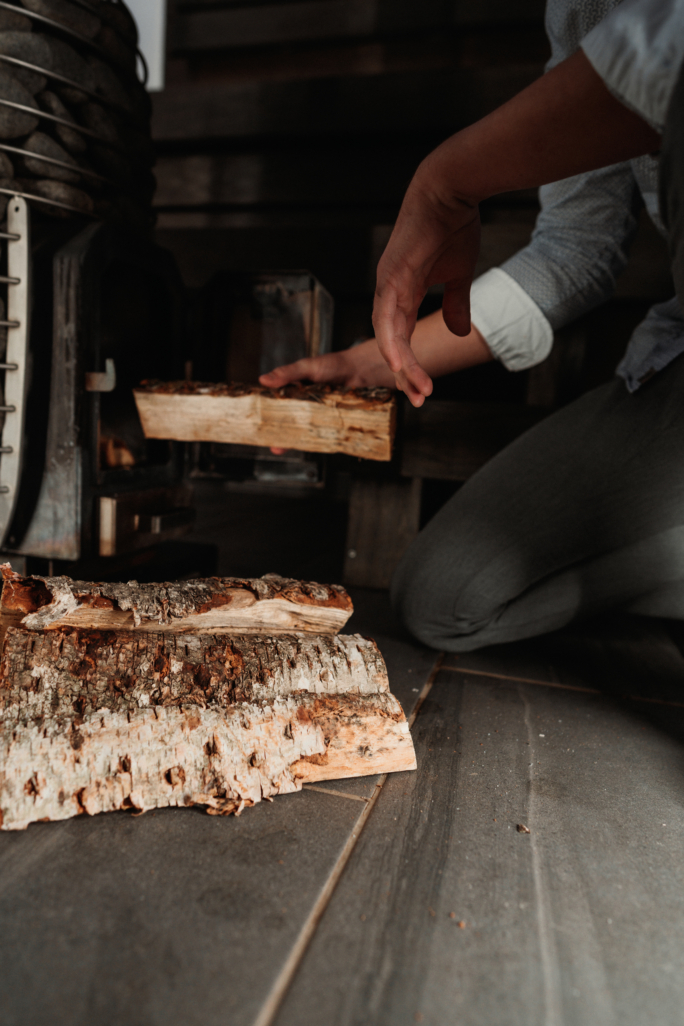
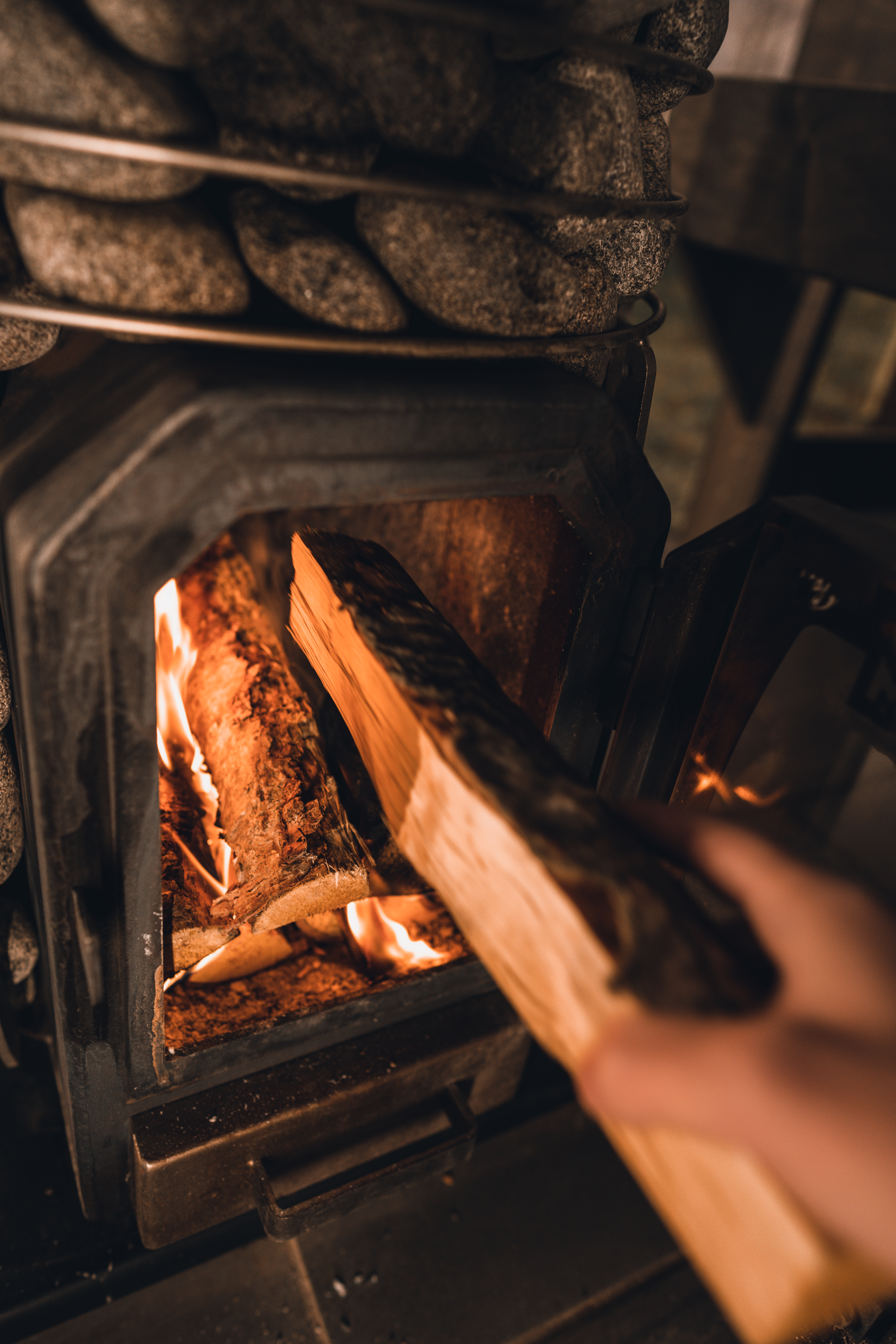
Birch, alder, and aspen are commonly used in Nordic saunas, but other suitable wood species can also be used depending on the stove.
An important detail is that the amount of firewood matters just as much as the type. Denser woods take up less space at the same weight, which means that filling a firebox based on the number of logs alone can be misleading.
Always follow the manufacturer’s recommendations for log size and maximum fuel load. Never burn painted, pressure-treated, chemically treated, or waste construction wood.
Why is dry firewood important for a wood-burning sauna?
Dry firewood is important for a wood-burning sauna because it helps the stove heat efficiently and supports more consistent combustion.
When wood contains too much moisture, part of the energy produced during combustion is used to evaporate water rather than heat the stove and sauna.
Burning wet logs can also lead to incomplete combustion, producing more smoke, soot, and harmful emissions.
In a wood-burning sauna, consistent heating allows the sauna stones to reach a suitable temperature. Pouring water over hot stones creates leil, the distinctive wave of heat and humidity that is central to the traditional Estonian sauna experience.
HUUM’s wood-burning sauna stoves, including HIVE Wood and HIVE Flow, combine traditional wood-fired heating with contemporary sauna design.
Using suitable, properly seasoned firewood and following the manufacturer’s heating instructions help ensure efficient and safe operation.
For more detailed guidance, explore HUUM’s wood-burning sauna stove support guides.
Good firewood makes a difference to your sauna
Good firewood makes a difference long before you sit down to enjoy the heat. When your logs are properly seasoned and stored, lighting the stove becomes easier, combustion is more consistent, and your sauna is better prepared for a relaxing session.
A little preparation means less time struggling with damp logs and more time enjoying the warmth and leil of your sauna.
Frequently asked questions
- Can you store firewood outside?
Yes. Firewood can be stored outside as long as it is protected from rain and snow and has sufficient airflow. Keep the logs raised off the ground and use a covered rack, woodshed, or properly protected woodpile.
- How long does firewood take to dry?
Firewood drying time depends on the wood species, log size, weather conditions, and storage method. It can take several months to more than a year. A wood moisture meter is the most reliable way to check whether your firewood is ready to burn.
- Can you store firewood in a garage?
Dry firewood can be stored in a suitable, well-ventilated garage, provided local fire safety requirements are met. However, a closed garage may not be the best place for seasoning freshly cut wood, as limited airflow can slow down drying.
- How can you tell if firewood is dry?
Dry firewood is often lighter than wet wood of the same size and species, and the ends may show visible cracks. Loose bark can also indicate that the wood has dried. For a reliable result, use a wood moisture meter and follow your stove manufacturer’s recommendations.
- Can you store firewood inside a sauna building?
A small amount of dry firewood can be kept in a suitable, well-ventilated area of a sauna building, provided it is safely away from the stove and other heat sources. For larger quantities, a separate woodshed or covered outdoor storage area is generally a better option.
Sources
- Hõbepappel, Urmas; Hõbepappel, Liisa; Nellis, Silja; Nellis, Siim (2023). Saun. Ajalugu. Kultuur. Tervis. Ehitus. Populus alba, pp. 150–152. Used for information about firewood moisture, suitable wood species, combustion, and preparing logs before heating a sauna.
- HETAS – Log Storage: How to Store Your Firewood Correctly and Safely. Guidance on storing logs off the ground, protecting them from moisture, and maintaining airflow.
- UK Department for Environment, Food & Rural Affairs (Defra) – A Guide to Buying, Storing and Seasoning Wood. Guidance on firewood seasoning, storage conditions, and identifying dry wood.