26.10.2026
Sauna with kids: 7 things parents should know about age and safety
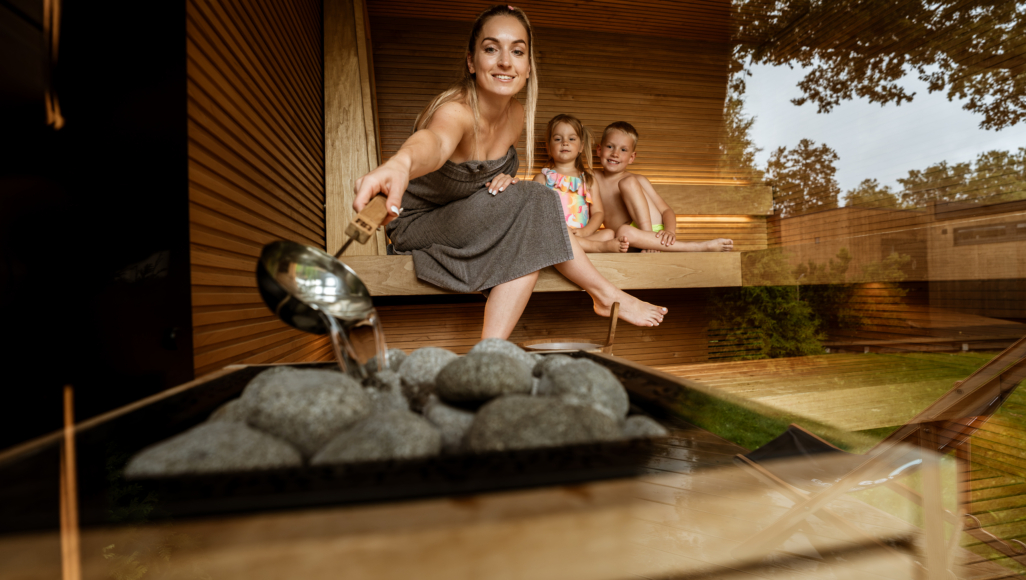
Sauna with kids can be a wonderful way to spend time together, introduce family traditions and enjoy a moment away from everyday distractions. In Estonia, where sauna has long been part of family life, sharing the experience across generations comes naturally.
If you are planning your child’s first sauna visit, you probably have questions. At what age can children start? How hot should the room be? How long should they stay inside? And what can you do to make the experience safer?
Children respond to high temperatures differently from adults, so a family sauna session requires a gentler approach. Here are seven things parents should know before bringing kids into the sauna room.
1. What age can kids go in the sauna?
What age can kids go in the sauna? There is no single starting age that suits every child. Readiness depends on health, previous experience and the ability to say when something feels wrong.
In Estonia, children have traditionally been introduced to sauna from an early age. The Estonian Saunaraamat describes how children were gradually introduced to the experience as a natural part of family life.

Tradition is not medical advice, though. Young children need particularly close supervision. For babies and toddlers, it is sensible to ask a healthcare professional for individual advice before their first sauna visit.
For older children, a useful sign of readiness is that they can tell you when they feel too hot, thirsty or unwell. Even then, adults should continue to watch for changes in mood, behaviour and comfort.
Age alone does not determine when a child is ready for sauna. Consider your child’s health, comfort and ability to communicate.
2. Children react to sauna heat differently from adults
Children react to sauna heat differently from adults because their bodies regulate temperature differently, especially at a young age.
In a hot environment, heart rate rises and the body works harder to maintain a stable internal temperature. Sweating plays an important role in cooling the body.
Research involving children in sauna conditions has shown that heart rate and body temperature rise during heat exposure. In children under five, researchers also observed a decrease in the amount of blood pumped with each heartbeat.
The Saunaraamat also notes that young children tend to sweat less and that their core body temperature can rise more quickly than an adult’s. A room that feels comfortable to you may already feel intense to them. The same applies to session length and the amount of leil — the wave of steam that rises when water is poured onto hot stones.
Children should not be expected to tolerate the same heat or session length as adults.
3. Start your child’s first sauna visit gently
Start your child’s first sauna visit gently: the goal is to get familiar with the sauna, not to stay in as long as possible.

A simple first visit could look like this:
- Choose a calm moment. Make sure your child feels well, rested and comfortable.
- Keep the heat gentle. Choose gentler heat than you normally would for adults, and skip the leil at first.
- Sit on a lower bench. Hot air rises, so lower seating usually feels noticeably milder.
- Keep the first visit brief. Watch how your child responds rather than setting a target time.
- Take a break. Step out, cool down gradually and offer drinking water.
- Ask how it felt. Let your child decide whether they want to go back in.
The Saunaraamat also recommends introducing sauna step by step. Children who are not used to the sauna room can begin with short visits and without throwing water onto the stones.
How long can a child stay in the sauna?
How long can a child stay in the sauna? There is no evidence-based number of minutes that fits every child or every age.
Research on children has used ten-minute exposures in sauna conditions, but this was part of a study design, not a recommendation for family sauna use.
For young or first-time sauna-goers, short visits with plenty of breaks are more sensible than following the clock.
What about infrared saunas?
What about infrared saunas? Lower air temperatures do not automatically make infrared saunas safer for children.
Follow the manufacturer’s instructions and use the same basic principles: moderate heat, short sessions, close supervision and attention to comfort.
4. Always supervise kids in the sauna
Always supervise kids in the sauna: a responsible adult should stay in the sauna room throughout the session, even with children who already know the environment well.
Young children may not recognise overheating early enough, and some may not immediately say they feel uncomfortable.
Before you go in, agree on a few simple rules:
- The heater and stones are very hot — never touch them.
- Move carefully on benches and steps.
- Running and active games belong outside the sauna room.
- You can leave whenever you want. No child should stay in just because the adults want another round.
Show your child where they will sit and where the exit is, and explain that it gets warmer higher up.
If you plan to pour water onto the stones, tell them beforehand. The sudden wave of leil can be surprising, especially during the first few visits.
The Saunaraamat also suggests playful ways to make the experience familiar, such as giving children their own small sauna whisk.
The aim is to make sauna feel positive and familiar while keeping safety at the centre of the experience.
5. Keep the leil and cooling down gentle
Keep the leil and cooling down gentle, because sudden changes in temperature can feel much stronger to a child.

In a traditional Estonian sauna, leil is an essential part of the experience. For a child who is still getting used to the heat, a strong wave of steam can feel overwhelming.
Leave it out of the first sessions, then introduce it gradually. Always tell your child before you pour water onto the stones so the sudden heat does not startle them.
Cooling down deserves the same attention.
After leaving the sauna room, rest somewhere comfortably cool. Fresh air or a lukewarm shower may be enough. Keep drinking water nearby and allow plenty of time between rounds.
Should kids take a cold plunge?
Should kids take a cold plunge? It is not necessary for children to enjoy the sauna experience.
Sudden immersion in very cold water causes a strong physiological response, and there is limited evidence about its safety in younger age groups.
For children, gradual cooling is the more cautious approach.
6. Make your home sauna safer for children
Make your home sauna safer for children by looking beyond temperature: the heater, benches, flooring, steps and lighting all matter.
The heater is one of the most important areas to consider. Hot metal surfaces and stones can cause serious burns if touched accidentally.
The Saunaraamat recommends a proper guard around the heater in saunas used by children. HUUM offers safety railings for compatible heater models to help reduce the risk of accidental contact with the heater.
A railing does not make the heater safe to touch and never replaces adult supervision. Always install it according to the heater’s required safety distances and instructions.
Look at your sauna from a child’s point of view and check:
- Are the benches and steps stable?
- Is the floor slip-resistant when wet?
- Is there enough light to move around safely?
- Is there a lower seat away from the hottest part of the room?
- Is the heater appropriately guarded?
- Is the exit easy to access and the door easy to open from inside?
These small details can make the sauna safer and more comfortable for the whole family.
7. Know when to skip or end a sauna session
Know when to skip or end a sauna session by paying attention to your child’s health, behaviour and comfort.
Even a child who normally enjoys the sauna may react differently on another day. Illness, tiredness, dehydration or a hotter-than-usual room can all make a difference.
A child with a fever or acute illness should not use the sauna. If your child has a medical condition that may affect temperature regulation or cardiovascular function, ask a healthcare professional for individual advice.
Leave the sauna room immediately if your child shows signs of:
- dizziness or headache;
- nausea or unusual weakness;
- obvious discomfort or distress;
- unusual tiredness or drowsiness;
- behaviour that seems noticeably different from normal.
Move the child to a cooler environment and allow them to cool down. If symptoms do not improve, seek medical advice.
Seek urgent medical help if your child faints, becomes confused or is difficult to wake or respond.
A child does not need to look unwell before a session should end. Wanting to leave is reason enough.
The goal is not to complete a certain number of rounds, tolerate stronger leil or stay longer than the previous time. A safe family sauna follows the child’s comfort rather than the clock.
Why share the sauna with your children?
Why share the sauna with your children? The most meaningful benefits may simply be the time spent together.

In Estonian sauna culture, the sauna room has long been a place where generations sit together, talk and share familiar rituals.
For children, being included in these traditions can create a sense of belonging and turn sauna into a calm family routine — a time to relax, talk and learn to notice the body’s own signals.
These are social and cultural benefits, not medical ones. There is not enough high-quality evidence to say that sauna strengthens children’s immune systems, improves their cardiovascular health or prevents illness.
For children, these shared routines can turn sauna into something familiar, positive and worth returning to.
Sauna with kids: the essentials
Sauna with kids: the essentials are simple — keep the experience gentle, supervised and guided by your child’s comfort.
- Keep the heat gentle and choose a lower bench.
- Introduce leil gradually and always warn your child before adding water to the stones.
- Keep drinking water nearby and cool down gradually.
- Always supervise.
- Follow your child’s comfort, not the clock.
A good family sauna is not measured by how hot it gets or how long anyone stays in. It is one where children feel comfortable, included and safe — and want to come back.
Frequently asked questions
- What age can a child go in the sauna?
There is no universally recommended starting age. Readiness depends on health, heat tolerance and the ability to communicate discomfort. For babies and toddlers, ask a healthcare professional for individual advice.
- Can babies go in the sauna?
Babies are particularly sensitive to heat and cannot tell you when they feel uncomfortable. Speak to a healthcare professional before taking a baby into the sauna.
- How long can a child stay in the sauna?
There is no evidence-based time limit that applies to every child. Start with short visits and let comfort, rather than the clock, guide the session.
- What temperature is safe for kids in the sauna?
There is no universally established safe sauna temperature for children. Use gentler heat than you would for adults, choose a lower bench and let your child’s comfort guide the session.
- Is an infrared sauna safer for children?
Not automatically. Infrared saunas generally have lower air temperatures, but the same principles apply: follow the manufacturer’s instructions, keep sessions short and always supervise.
- Should kids take a cold plunge after the sauna?
It is not necessary. Gradual cooling with fresh air or a lukewarm shower is the more cautious approach for children.
This article provides general information and is not medical advice. If you are unsure whether sauna is suitable for your child, speak to a healthcare professional.
Sources
- Hõbepappel, U., Hõbepappel, L., Nellis, S. & Nellis, S. (2023). Saun. Ajalugu, kultuur, tervis, ehitus. Populus alba. Chapter “Lapsed saunalaval”, pp. 226–228. Used for practical guidance on introducing children to sauna gradually, lower seating, supervision, hydration, lighting, stable steps, slip-resistant flooring and heater guards.
- Children in sauna: cardiovascular adjustment. Pediatrics, 1990. Research on heart rate, body temperature and cardiovascular responses during sauna heat in children.
- Sauna habits and related symptoms in Finnish children. European Journal of Pediatrics, 1989. Questionnaire study on sauna habits and immediate symptoms in children aged 0–15.
- The sauna and children. Annals of Clinical Research, 1988. Review of children’s thermoregulation in sauna conditions and the limited objective guidance available for infants and children.